What Toy Inventors Can Teach Entrepreneurs About Innovating With AI
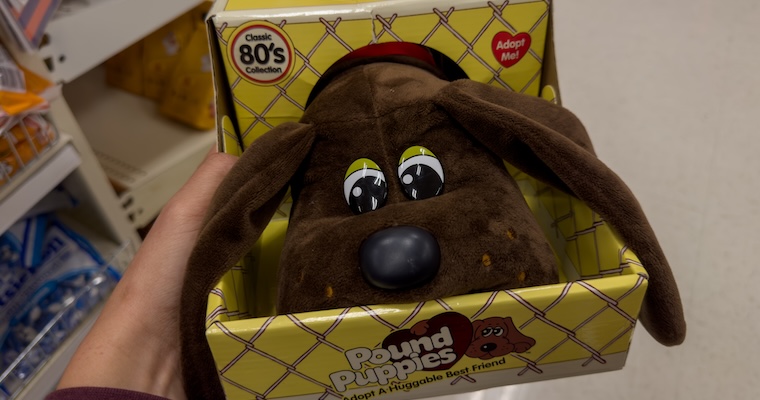
Tickle Me Elmo, Pound Puppies and other toy hits reveal why human insight, emotion and lived experience still matter in the age of generative AI.
Toy invention is a brutal business. On the worst days, I received the dreaded box in the mail: another rejected prototype. The same product development manager who had raved about the toy prototype just a month earlier was now sending me a boilerplate thank-you letter. Another one bites the dust.
Occasionally, good news arrived, almost always over the phone, since people love sharing successes. Ultimately, my partners and I licensed over 50 new toys and games. I say “we” proudly because every single product was built with one or more collaborators. As the old saying goes, “no one of us is as smart as all of us.” These toys and games were the lucky few that had survived multiple hurdles: rigorous product development, market research, strict pricing constraints, and initial support from retail buyers. Yet almost 90% of them would ultimately fail to catch on with the most fickle consumers of all—little boys and girls—and join my library of heroic failures.
A blue ocean strategy aims to build uncontested market spaces free from direct competition. However, generative AI has drastically slashed product launch times and costs, turning once-tranquil blue oceans into crowded, hyper-competitive red oceans flooded with copycats. The following vignettes draw key lessons from the fiercely competitive toy industry to help new ventures navigate this AI-driven landscape.
Story 1: Tickling the Imagination
When little Parker O’Donnell accidentally dropped his soft plush toy into the toilet, his mother reached in to retrieve it—only to have the toy laugh back at her. The story was funny enough to share with friends, except Parker’s mother happened to have a much larger audience: millions of viewers watching her nationally televised talk show.
Tyco, the toy’s manufacturer, sent 200 copies of the toy to the show, which Rosie O’Donnell distributed to members of the studio audience. Before long, the entire audience was laughing along with the toys. Overnight, a national craze began. Toy stores across America sold out, and fights even broke out in toy aisles over the last remaining toys. Parker’s mother had inadvertently helped ignite one of the biggest toy crazes of the 1990s.
It is too simple, however, to attribute Tickle Me Elmo’s success to Rosie O’Donnell. The publicity certainly helped, but the toy had an intrinsic appeal that allowed the story to spread— Tickle Me Elmo generated “magic” within seconds. With the first tickle, Elmo laughed. With the second, he laughed louder. But the third tickle delivered a surprise: Elmo began shaking in a laughing fit.
Co-inventors Greg Hyman and Ron Dubren were not the first to create a laughing plush toy. Gund had introduced a laughing bear in 1954 that sold more than a million copies. But Tickle Me Elmo introduced a technological breakthrough: Microprocessors enabled multiple levels of interaction, allowing the toy to react differently as the child continued to tickle it. Research suggests that people can lose focus when an interaction takes more than about ten seconds or requires extensive instructions. Not only did Tickle Me Elmo deliver its magic instantly, but it also generated a surprise twist—shaking—on the third tickle. A key takeaway for product developers is the importance of rapid feedback. Consumers can be impatient!
Story 2: Pet Rock: The Power of a Simple Story
People love pets, but pets need time and work. Imagine a pet that needs no feeding, walking, training, or cleaning. That was the clever idea Gary Dahl produced when he created the “Pet Rock.” Dahl took a pebble from Mexico’s Rosarito Beach, placed it in a cardboard box with ventilation holes, and included a 20-page training manual that taught owners how to train their Pet Rock to follow commands such as “stay” and “heel.” Fueled by extensive media exposure, the gag became a national craze in late 1975, selling more than a million units. Competitors quickly copied the idea. One knockoff even cheekily called itself the “Original Pet Rock.” Within six months, the craze was over.
The Pet Rock’s secret was its simple story: an ordinary product became memorable because the story made it fun and easy to share. But without a moat around the product, the Pet Rocks concept was marooned in a red ocean where competitors could quickly copy the idea. The rise of AI makes the old competitive formula of building “better, faster, cheaper” increasingly available to all. Competitors can employ AI to generate hundreds of product ideas and compress the product development cycle. Consequently, AI doesn’t eliminate blue oceans but shortens their lifespan. In the next story, Pound Puppies offers one way of extending life in a blue ocean.
Story 3: Pound Puppies: The Power of Emotion
Mike Bowling was a Ford factory worker with no experience in the toy industry, but he noticed how his daughter was besotted with her soft doll, carrying it everywhere and treating it like a best friend. Given that a dog is a person’s best friend, Mike asked, “What if a child could rescue a lonely puppy and give it a loving home?”
A common adage in creative product development is to “think outside the box.” But the experience of successful toy inventors suggests that great ideas often come from looking closely at what already works. Plush dogs were nothing new, and Cabbage Patch Kids had already pioneered the “adoption experience.” Pound Puppies was essentially a “remix,” combining lovable puppies—with sad eyes and floppy, droopy ears—with the emotional experience of adoption.
The product was far from an instant hit. Fourteen companies rejected it before Irwin Toys in Canada took a chance. It became a hit in Canada and was subsequently licensed to Tonka Toys for the U.S. market. In 1985 alone, more than 2.5 million Pound Puppies were sold. The success spawned books, television cartoons, and eventually a feature film.
Whereas Pet Rock shows how a clever story can generate enormous short-term attention, Pound Puppies demonstrates something deeper: When a product taps into human emotion, it becomes more compelling and can create a lasting connection to the customer.
Story 4: Rocket Fishing Rod: Solve the Frustration
Zach was three years old and learning to fish with his grandfather, Dennis, on Warren Lake in Fort Collins. But casting the rod was a nightmare. Instead of landing the line in the water, Zach mostly caught tangled line—and once, his grandfather’s sweater. After watching yet another failed cast, Dennis Wyman thought there had to be a better way of casting a fishing line. Working with his partner, Paul von Mohr, Dennis experimented with multiple methods. The final design was a pressurized fishing rod resembling a sawn-off rocket that allowed a beginner to simply point, squeeze the trigger, and send the line, bobber, and hook splashing into the water about 25 feet away. The inventors had unknowingly employed design thinking to redesign the experience around the user’s frustration, turning the most frustrating part of fishing—casting—into the most fun part. Sometimes the best opportunity is not to improve the entire product, but to redesign “the box itself” and transform its most frustrating experience. Rocket Fishing Rod went on to sell more than one million units.
Tips for Product Developers, Including Future Toy Inventors
The toy market is notoriously volatile, shaped by fickle children’s preferences and low barriers to entry – a fragility famously demonstrated by the meteoric rise and fall of Pet Rocks. While Generative AI uses algorithms to produce concepts near the center of the probability curve, true breakthrough innovations live in the statistical tail: non-consensus, counterintuitive concepts backed by limited historical data. Licensed toy innovations are rarely simple incremental improvements. If they were, internal toy teams could easily build them without paying royalties. How can product teams innovating out on the statistical tail stay ahead in an era of rapid, Gen AI-driven development cycles? Here are three key lessons inspired by top toy inventors.
Become an M-Shaped Product Designer. The story of Tickle Me Elmo illustrates the power of cross-disciplinary expertise. While microprocessors provided the initial breakthrough, adding a mechanical vibration motor transformed Elmo from a toy that simply laughed to one that came alive. The magic wasn’t in electronics or mechanical engineering alone, but in their intersection. M-Shaped professionals possess expertise in multiple specialties. An M-Shaped developer might specialize in electronics, software, or AI, while maintaining strong fluency in adjacent disciplines like mechanical engineering, marketing, or design. The goal isn’t universal mastery, but sufficient breadth to connect dots that single-domain specialists, working in silos, inevitably miss.
No Substitute for Lived Experience. The story of Pound Puppies illustrates how human insight and strategic partnership fuel breakthrough innovation. Creator Mike Bowling had the core concept of a “rescue-and-adopt” plush puppy but lacked toy industry experience to bring it to market alone. Recognizing this gap, he partnered with Bob Steiner, whose family founded Kenner Toys. Steiner’s industry expertise was critical in securing a licensing deal, but his mentorship proved just as valuable: He supplied Bowling with the encouragement and motivation to persevere through 14 rejections before achieving a blockbuster hit.
Remix Across Sectors. Historically, fishing equipment was sold in sporting goods departments, with industry R&D focused on incremental upgrades to rods, reels, and tackle for experienced anglers. The breakthrough for the Rocket Fishing Rod stemmed from a completely unmodeled human moment: a fishing hook caught in a sweater. As a toy inventor, Dennis Wyman shifted the core design question from the conventional “How do we build a better fishing rod?” to “Why do we need to cast at all?” Dennis unlocked a new play experience by fusing a fishing rod with a classic toy-rocket mechanism, creating a blue-ocean product with no direct competition in the toy market.
Look for Hits in the Outliers
Gen AI excels at probabilistic pattern matching. By predicting the next token or design step, it can generate dozens of product concepts in seconds – making it ideal for incremental product improvements. However, true breakthroughs emerge from the statistical tails, defying predictable patterns. Legendary hits like Monopoly, Trivial Pursuit, Cabbage Patch Kids, Tickle Me Elmo, and Pound Puppies were all created by independent external inventors, not in-house R&D. These outlier hits live at the edges of conventional thinking, where human talent, judgment, and lived experience remain irreplaceable. So, the next time you have a belly laugh, pet an adorable puppy, or have your sweater snagged by a fishhook, stop and ask, “Could this experience be an invention waiting to happen?”